


“Miracle on Ice” 1980: How a Hockey Game Became a Cold War Symbol
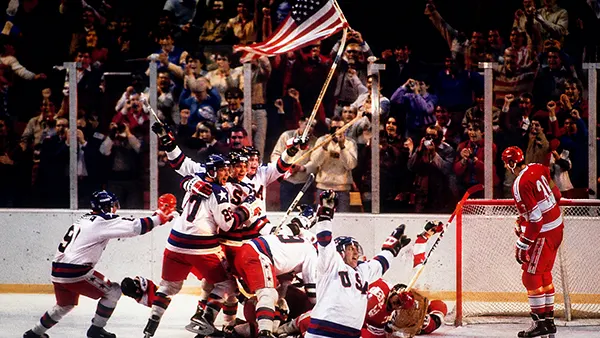
The 1980 Winter Olympics in Lake Placid delivered one of the most remarkable moments in sporting history. The United States ice hockey team, composed largely of amateur and collegiate players, defeated the heavily favoured Soviet Union side, widely regarded as the strongest team in the world. This match was not simply about sport—it reflected the broader political tensions of the Cold War, turning a single game into a global symbol of ideological rivalry and national identity.
Historical Context Behind the USA vs USSR Clash
By 1980, the Cold War had shaped international relations for decades. The United States and the Soviet Union were locked in a struggle that extended far beyond military power, influencing culture, science, and sport. Olympic competitions often became a stage where each side attempted to demonstrate superiority without direct conflict.
The Soviet ice hockey team had dominated international competitions throughout the 1960s and 1970s. Their system was built on rigorous training, centralised control, and a level of cohesion rarely seen in amateur sport. Many observers considered them virtually unbeatable, especially when facing teams without comparable resources.
In contrast, the United States squad entered the 1980 Olympics with little expectation of success. Coached by Herb Brooks, the team consisted mainly of young players from university programmes. Their preparation focused on discipline, adaptability, and psychological resilience rather than experience at the highest level.
Why the Match Carried Political Significance
The Cold War atmosphere ensured that any direct competition between the USA and USSR carried symbolic weight. Victories were interpreted not only as sporting achievements but as reflections of political and ideological strength. This context heightened the stakes of the hockey match far beyond a standard Olympic fixture.
Media coverage in both countries reinforced this narrative. American outlets framed the game as a test of national determination, while Soviet reporting emphasised expected dominance. The contrasting expectations created a dramatic backdrop that intensified global attention.
Additionally, the match took place during a period of renewed tension, including the Soviet invasion of Afghanistan in 1979. This further influenced public perception, turning the game into a moment where sport and geopolitics intersected in a highly visible way.
The Game Itself: Strategy, Turning Points, and Outcome
The match on 22 February 1980 unfolded with a pace and intensity that reflected both teams’ contrasting styles. The Soviet team relied on precise passing and structured play, while the American side focused on speed, pressure, and opportunistic attacks.
Despite early Soviet control, the United States remained competitive throughout the game. Key moments included a crucial goal by Mike Eruzione, which gave the Americans a late lead. The defensive efforts in the final minutes were equally significant, as the team resisted sustained pressure from their opponents.
Goalkeeper Jim Craig played a decisive role, making several critical saves that kept the United States ahead. His performance demonstrated how individual contributions could influence the outcome, even against a technically superior opponent.
Key Factors Behind the American Victory
One of the defining elements was coaching strategy. Herb Brooks had designed a system that maximised the strengths of his players, emphasising endurance and quick transitions. This approach disrupted the Soviet team’s rhythm and created scoring opportunities.
Team cohesion also played an essential role. While the Soviet players had years of experience together, the American team developed strong unity during their preparation. This cohesion translated into effective communication and adaptability during the match.
Finally, psychological resilience proved decisive. The American players maintained composure despite being under constant pressure. Their ability to manage stress and remain focused allowed them to capitalise on key moments and secure the victory.

Legacy and Long-Term Impact of the “Miracle on Ice”
The victory had an immediate emotional impact in the United States, where it was celebrated as a symbol of perseverance and national pride. It resonated beyond sport, offering a moment of optimism during a period marked by political uncertainty and economic challenges.
Internationally, the result challenged assumptions about dominance in Olympic sport. It demonstrated that structured systems could be overcome by strategy, preparation, and collective effort. This influenced how teams approached international competitions in subsequent years.
The match also contributed to the broader narrative of the Cold War. While it did not alter political realities, it provided a symbolic moment that reflected shifting perceptions and the potential for unexpected outcomes in global rivalry.
How the Event Is Remembered Today
Decades later, the “Miracle on Ice” remains a reference point in discussions about sport and politics. It is frequently cited in academic analyses, documentaries, and historical accounts as an example of how athletic events can carry deeper meaning.
The game has been preserved through media archives, including televised footage and commentary, most notably the famous question, “Do you believe in miracles?” This moment continues to define the emotional intensity of the match for many audiences.
Its legacy extends into modern sport, where underdog victories are often compared to the 1980 game. The match serves as a reminder that outcomes in sport are not solely determined by rankings or resources, but also by preparation, mindset, and the context in which competition takes place.