

NCAA Scandal 2026: What We Know About the Large-Scale Point-Shaving Scheme in College Basketball
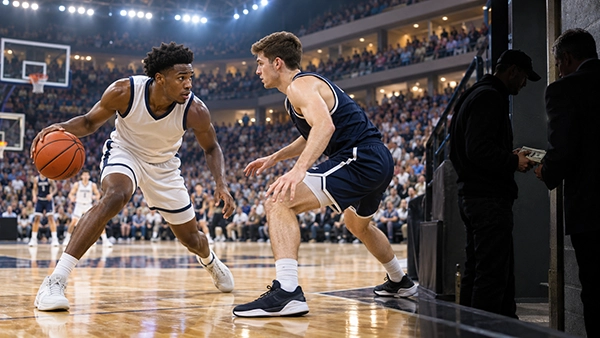
One of the biggest integrity cases to hit American college basketball became public on 15 January 2026, when federal prosecutors in Pennsylvania announced charges against 26 people in connection with an alleged bribery and point-shaving operation involving NCAA Division I men’s basketball and the Chinese Basketball Association. According to the federal case, more than 39 college players from more than 17 Division I teams were involved in fixing or attempting to fix more than 29 NCAA games during the 2023–24 and 2024–25 seasons. The date is important: the scandal became a major national story in 2026, but most of the alleged manipulation took place in earlier seasons. It is equally important to separate accusations from established facts. An indictment is not a conviction, and defendants who have not admitted guilt or been convicted remain presumed innocent. At the same time, subsequent guilty pleas and separate NCAA findings have confirmed that serious betting-related integrity violations did occur within college basketball.
What Federal Prosecutors Say Happened
The federal case describes an operation that did not begin in the NCAA. Prosecutors allege that members of the group first became involved in manipulating Chinese Basketball Association games during the 2022–23 season. After making money from those contests, the organisers allegedly expanded their activity into American college basketball. During the 2023–24 and 2024–25 NCAA seasons, they are accused of recruiting players who could influence whether their teams covered a betting spread. Federal prosecutors say the college portion eventually involved more than 39 players across more than 17 Division I programmes and more than 29 games that were either successfully manipulated or targeted for manipulation. Millions of dollars were allegedly wagered on the affected contests, while players collectively received hundreds of thousands of dollars in payments.
The January indictment identified Jalen Smith, Marves Fairley, Shane Hennen, Antonio Blakeney, Roderick Winkler and Alberto Laureano among the people prosecutors described as organisers or recruiters in the wider operation. The alleged recruitment process was often direct rather than sophisticated. Players were contacted through personal basketball connections, social media, telephone calls, text messages and video calls. Prosecutors said proposed payments were generally between $10,000 and $30,000 per game. The indictment also alleges that recruiters deliberately sought players for whom such a payment could represent a substantial amount compared with their legitimate Name, Image and Likeness earnings. That claim describes the prosecutors’ theory of recruitment rather than a general statement about the financial circumstances of NCAA athletes.
The alleged objective was often not to make a team lose outright. In many cases, the aim was to make sure a team failed to cover the point spread for either the first half or the entire game. Recruiters frequently targeted players on teams that were already underdogs, according to prosecutors, because relatively small changes in performance could potentially determine the outcome of a spread bet. This distinction explains why point-shaving can be difficult for ordinary viewers to recognise. A team may lose a game it was expected to lose, or may even win, while a few missed opportunities or an unusually poor stretch of play can still determine whether a particular wager succeeds.
How Point-Shaving Can Change a Game Without Changing the Winner
Point-shaving is easier to understand when separated from the idea of deliberately losing a match. A betting spread gives one team a numerical advantage for wagering purposes. If a team is a 7-point underdog, for example, it can lose by six points and still cover the spread. A player involved in point-shaving does not necessarily need to turn a victory into a defeat. The goal may simply be to influence the scoring margin enough to make a particular side of the wager successful. The same principle applies to first-half betting, where only the score at half-time matters. Prosecutors allege that several games in the federal case were targeted specifically through first-half spreads, allowing the relevant wager to be settled before the match itself had finished.
Court filings describe several ways in which players allegedly tried to influence those margins. These included intentionally underperforming, making avoidable mistakes, reducing their involvement in important passages of play, leaving games, helping recruit teammates and trying to keep the ball away from teammates who were not part of the arrangement. In some instances, prosecutors say recruiters communicated with players close to or even during games. Not every alleged attempt was successful. Basketball remains unpredictable, and one player cannot always control how teammates or opponents perform. Some targeted games therefore produced losing bets for the people who had allegedly arranged the manipulation.
Poor performance on its own is not evidence of point-shaving. Players miss shots, commit turnovers and have bad games for countless legitimate reasons, which is why integrity investigations rely on more than statistics or an unusual final score. Investigators can examine betting patterns, communications, financial transactions, account activity and links between athletes and known bettors. In several NCAA cases, suspicious wagering identified by integrity-monitoring services became a starting point for further investigation rather than proof by itself. This distinction matters because the 2026 case concerns specific evidence and alleged communications, not a claim that an unexpected result or a badly played game should automatically be treated as suspicious.
Players, Teams and Games Named in the 2026 Case
The indictment connected alleged participants with a wide range of Division I programmes. Schools associated with players named in the federal allegations included Abilene Christian, Alabama State, Buffalo, Coppin State, DePaul, Eastern Michigan, Fordham, Kennesaw State, La Salle, New Orleans, Nicholls, North Carolina A&T, Northwestern State, Robert Morris, Saint Louis, Southern Miss and Tulane. That does not mean the universities themselves, their coaches or other members of their teams were accused of organising the operation. In fact, NCAA statements concerning a number of betting cases have specifically distinguished individual player conduct from institutional involvement. The federal allegations focus primarily on particular athletes, bettors and recruiters.
The reach of the investigation also extends beyond the schools where accused players competed. Opponents naturally appear throughout court filings because their games supplied the betting markets that were allegedly targeted. A university appearing as an opponent in a described game should therefore not be treated as implicated in wrongdoing. This is especially important in such a large case, because federal filings refer to numerous teams, tournaments and conferences while explaining the individual wagers. Reporting the scandal accurately requires distinguishing a programme that had an allegedly involved player from a programme that simply happened to play against a targeted team.
Some of the people charged in January had continued playing college basketball into the 2025–26 season before the indictment was announced. Contemporary reports identified Simeon Cottle at Kennesaw State, Camian Shell at Delaware State, Carlos Hart at Eastern Michigan and Oumar Koureissi at Texas Southern among players who had recently appeared in games when the charges became public. Their 2026 teams should not automatically be linked to the conduct described in earlier seasons, however. Transfers are common in modern college basketball, and several allegations concern games played while defendants were at previous schools. The relevant question in each case is where and when the alleged conduct occurred, rather than where a player happened to be enrolled when charges were announced.
Three Concrete Examples From the Record
One example described by prosecutors involves Fordham’s game against Duquesne on 23 February 2024. According to the indictment, Elijah Gray was offered roughly $10,000 to $15,000 to take part and was asked to recruit another Fordham player. Prosecutors allege that both were instructed to help ensure Fordham failed to cover the full-game spread. Duquesne was favoured by approximately 3.5 points, and the people behind the scheme allegedly placed wagers totalling at least about $195,000 on Duquesne, with most of that money backing the team to cover. These remain allegations in the federal case and should not be confused with a final judicial determination against every person named in the episode.
A second example concerns Buffalo’s home game against Ohio on 5 March 2024. Federal filings allege that several Buffalo players had agreed to influence the first half so their team would fail to cover the spread. Ohio was favoured by roughly 5.5 points for the opening half. Ohio went into the break leading 40–33, a seven-point margin that covered the stated first-half line, and prosecutors say the bettors behind the alleged arrangement won their wagers. The example shows why first-half markets attracted particular attention: participants did not need to control an entire 40-minute contest if the wager they were targeting was settled at half-time.
A later Alabama State case moved beyond federal allegations into a formal NCAA infractions finding. In June 2026, the NCAA said former Alabama State players Amarr Knox, Shawn Fulcher, Corey Hines and Tony Madlock had been involved in sports-betting integrity violations connected with the 5 December 2024 game against Southern Mississippi. According to the NCAA’s negotiated resolution, the four players agreed with outside bettors to manipulate the game, and they received a total of $2,000 after it. All four were deemed permanently ineligible for NCAA competition. The relatively small payment in that case is notable because it shows that confirmed integrity violations did not always involve the much larger $10,000-to-$30,000 payments alleged elsewhere in the federal investigation.
What Changed After the Charges Became Public
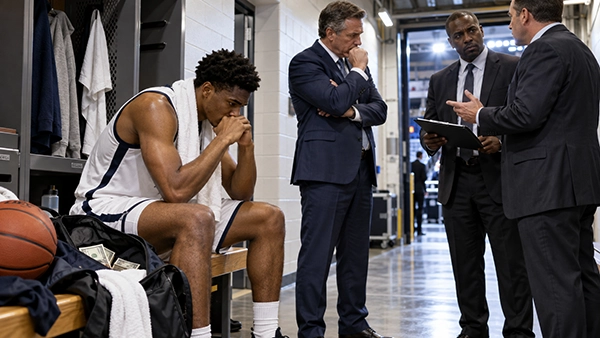
The criminal case also produced a significant development on 9 March 2026, when Jalen Smith pleaded guilty in federal court. The U.S. Attorney’s Office said Smith admitted to bribery in sporting contests, conspiracy to commit wire fraud and wire fraud in connection with the basketball scheme, as well as a separate firearms offence. Prosecutors described him as having a leadership role in recruiting, managing and paying players. His guilty plea is legally different from the allegations against defendants whose cases have not resulted in an admission or conviction. It confirms his own criminal involvement but does not by itself establish the guilt of every other person charged in the broader indictment.
The NCAA had already been investigating betting-related conduct before the January federal announcement. On 15 January, NCAA president Charlie Baker said enforcement staff had opened sports-betting integrity investigations involving approximately 40 student-athletes from 20 schools during the preceding year. According to the NCAA, 11 athletes from seven schools had been found to have bet on their own performances, provided information to known bettors and/or participated in game manipulation, resulting in permanent loss of eligibility. Thirteen athletes from eight schools, including some of the same individuals, had also been found to have failed to cooperate fully with integrity investigations. Additional decisions followed during 2026, including cases involving Fordham, Abilene Christian, Alabama State, Kennesaw State and Iona.
The response has also extended beyond disciplinary cases. The NCAA continued to call for restrictions on individual college-athlete proposition bets and other markets it considers particularly vulnerable to manipulation, including certain first-half wagers. It says its integrity-monitoring programme covers more than 22,000 contests. For the 2026 Division I men’s and women’s basketball championships, the organisation also introduced a pilot system of player availability reports. The stated purpose was to reduce pressure on athletes and limit attempts to obtain private information about injuries or playing status for betting purposes. These measures do not prove that betting restrictions alone can prevent corruption, but they show how the scandal has influenced the NCAA’s approach to competition integrity.
Why the 2026 Scandal Matters for College Basketball
The scale of the allegations makes the case important even though the games at issue represent only a small fraction of Division I basketball. A manipulated spread can affect far more people than the participants arranging it. Teammates who are unaware of the scheme compete in a contest whose conditions may have been deliberately altered. Opponents may have no idea that someone across the court is playing to a betting objective rather than purely to win. Sportsbooks and ordinary bettors can also lose money on markets in which one side allegedly has advance knowledge. Most importantly for the sport itself, repeated manipulation damages the assumption that every player on the court is competing honestly.
The case has also brought renewed attention to how outsiders can approach college athletes. Prosecutors allege that the organisers relied heavily on existing relationships within basketball, including trainers, former players and other people who already had credibility with athletes. They also claim that some players were selected because large cash payments could compare favourably with their legitimate NIL earnings. That does not establish a simple link between athlete compensation and corruption, nor does it suggest that lower-paid athletes are inherently more likely to break rules. It does show, however, why education, clear reporting channels and monitoring of suspicious approaches have become central parts of integrity work in college sport.
The most accurate way to understand the NCAA scandal in 2026 is therefore to resist treating every part of the story as equally proven. Federal prosecutors have laid out an unusually broad alleged scheme involving dozens of players, many games and millions of dollars in wagers. Smith has admitted criminal involvement, while the NCAA has separately confirmed game manipulation and serious betting violations in several disciplinary cases. Other federal defendants retain the presumption of innocence unless their cases result in guilty pleas or convictions. What is already clear is that point-shaving is not merely a historical problem from an earlier era of college sport. The events documented in 2025 and 2026 show that betting-related manipulation remains a real integrity risk and that relatively small changes inside a basketball game can have consequences well beyond the final score.