


Calciopoli (2006): What the Scandal Revealed About Football Governance and Betting Integrity
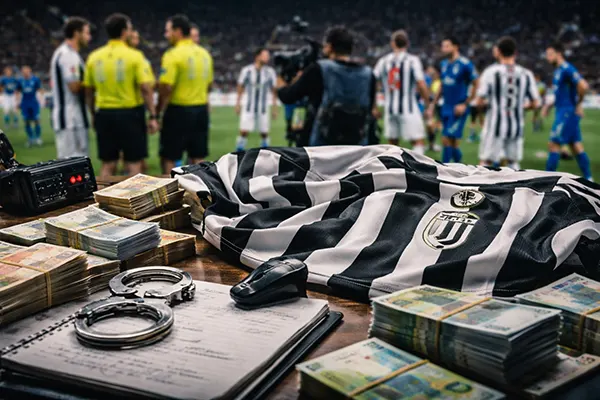
Calciopoli is still one of the most important integrity case studies in European football. Although it broke in May 2006, its consequences shaped Serie A’s image for years and influenced how modern integrity units monitor risk in betting markets. The scandal was not primarily about a single “fixed match” caught on tape, but about an attempt to influence referee appointments during the 2004–05 and 2005–06 seasons. That distinction matters because influencing the conditions around a match can be just as damaging as manipulating the final score. By 2026, Calciopoli remains a reference point for football regulators and betting compliance teams when discussing systemic vulnerabilities.
How referee appointment influence became the centre of the scandal
The investigations uncovered patterns of contact between senior club figures and individuals linked to referee management. In Italy at the time, referee appointments were decided inside structures that were not designed for public transparency. Wiretaps showed conversations where club executives attempted to shape which referees would officiate particular matches and which officials should be avoided. That is a powerful lever because refereeing style can affect penalties, bookings, and the flow of play even without overt “fixing”.
Calciopoli was exposed in May 2006 when Italian prosecutors’ telephone intercepts became public. The calls pointed to a network where certain executives behaved as if referee assignments could be negotiated. It created an environment in which fairness could be questioned across an entire season, not just in isolated fixtures. The damage to credibility was therefore wider: it affected clubs, league administration, and Italy’s international football reputation.
From an integrity perspective, the case demonstrated how manipulation can operate indirectly. If a club can influence the appointment process, it can gain consistent advantages across multiple matches without needing to bribe players or referees directly. This is why Calciopoli remains relevant in 2026: integrity threats are often about process control, not just dramatic match-fixing conspiracies.
Why “soft manipulation” is dangerous for modern betting markets
Betting markets in 2026 go far beyond final score or match winner. Bookmakers offer odds on penalties, cards, corners, and other micro-events. If referee appointments are compromised, these markets become vulnerable because different officials have distinct tendencies: some give more bookings, others award more penalties, and some allow more physical play. That creates value for insiders who understand patterns better than the market can price.
This is why integrity monitoring does not only focus on suspicious scorelines. Modern systems look for irregular betting on very specific events that might correlate with officiating styles. Calciopoli showed that when governance is weak, the risk is not simply one altered result — it is a long-term distortion of the competitive environment that influences many small outcomes across a season.
Crucially, this type of misconduct also creates a trust issue. Even if a match looks “normal”, knowledge that appointments were influenced makes bettors and fans question fairness. The perception of integrity is as important as integrity itself because the betting economy relies on confidence that matches are administered impartially.
The sporting punishments and what they meant for Italian football
The punishments were severe, particularly for Juventus. In July 2006, Juventus were relegated to Serie B and were stripped of the 2004–05 Serie A title, which was left unassigned. They were also placed last in the 2005–06 Serie A table, and that title was awarded to Inter. Juventus started the 2006–07 season in Serie B with a points penalty that was reduced on appeal, ending at a nine-point deduction.
Other clubs were also sanctioned. AC Milan received a points deduction for the 2006–07 season and were temporarily excluded from the Champions League before appeals adjusted the outcomes. Fiorentina and Lazio initially faced relegation, but that part of the punishment was later overturned, with points deductions applied instead. Reggina were also penalised with a points deduction and fines.
The significance of these punishments was not only sporting. They were designed to restore confidence and signal that Italian football would impose consequences for institutional interference. Even in 2026, Calciopoli is frequently cited because it shows how a league can suffer long-term reputational harm when it fails to protect key integrity mechanisms such as referee assignment and disciplinary oversight.
Why the sanctions still matter in 2026
In modern football governance, Calciopoli is often used to explain why integrity systems must be independent. Referee appointment procedures are now treated as a high-risk governance area in many countries, and leagues have increased internal controls, auditing processes, and oversight structures. The lesson was clear: if the process can be influenced privately, trust collapses publicly.
For betting operators, the case is equally instructive. Integrity teams track unusual market movements and attempt to assess whether they indicate insider information, manipulation, or structural weaknesses. Calciopoli reinforced the idea that “integrity incidents” can emerge from governance, not just from criminal match-fixing. That is why monitoring is often paired with education and compliance work inside clubs and federations.
It also influenced how disciplinary action is understood. Sporting justice can move faster than criminal justice, and integrity bodies often focus on protecting competition rather than waiting for slow legal outcomes. In the Calciopoli criminal proceedings, many outcomes later became complicated by legal time limits, but the sporting punishments had already reshaped Italian football.

What Calciopoli teaches about prevention, transparency, and bettor protection
The most practical lesson from Calciopoli is that prevention is cheaper than repair. Once trust is damaged, it takes years to rebuild, and even a successful national team cannot fully erase the shadow of governance scandals. By 2026, most major leagues treat integrity governance as an operational necessity rather than a public relations exercise. That includes clear appointment rules, traceable decision-making, and independent ethics mechanisms.
Transparency is another central theme. Football cannot make every internal decision public, but it can build systems where decisions are accountable and auditable. When appointments and disciplinary processes are protected by robust governance, it becomes harder for personal relationships to override neutrality. Calciopoli is a reminder that “informal influence” can be as harmful as explicit corruption.
Finally, the scandal highlights bettor protection as part of integrity policy. Betting markets depend on fairness, and bettors suffer when competitions are manipulated. In 2026, integrity partnerships between sporting bodies and regulated betting operators are more common, with information-sharing agreements, alert systems, and reporting channels aimed at spotting anomalies early. Calciopoli remains a key historical example used to justify why these systems exist.
How integrity controls can reduce risk in today’s football economy
One effective control is the separation of duties: the people who appoint referees must be insulated from club pressure, and their decisions should be overseen through compliance-style checks. Many leagues now use appointment panels, rotation policies, and data-driven evaluation. The goal is not only fairness but also the appearance of fairness, which is essential for public confidence.
Another control is active monitoring of betting markets. Modern integrity systems flag unusual betting volumes, sharp shifts in odds, and suspicious patterns in micro-markets like penalties or cards. These signals do not prove corruption on their own, but they help integrity bodies ask the right questions quickly. Calciopoli showed that waiting until a scandal becomes public is the worst possible approach.
The final layer is education and accountability inside clubs. Staff must understand that integrity issues are not limited to players on the pitch. Directors, intermediaries, and executives can create the conditions for corruption if governance culture is weak. In 2026, integrity training and clear internal policies are standard at many clubs, precisely because scandals like Calciopoli demonstrated how damage can spread across an entire league.